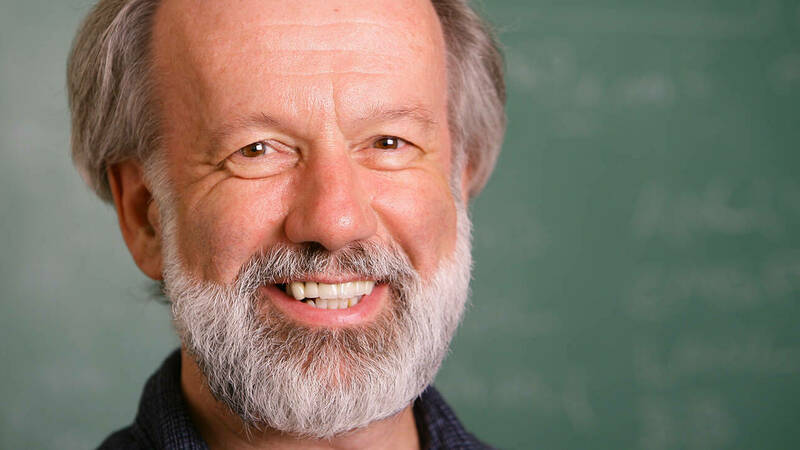
Ian Carmichael
Professor; Director, Notre Dame Radiation Laboratory
- Office
- 323 Radiation Research Building
Notre Dame, IN 46556-5674 - Phone
- +1 574-631-4502
- carmichael.1@nd.edu
Research Areas
- Physical/Analytical Chemistry
Research Specialties
- Energy
- Theory
Prospective Graduate Students
Biography
| Year | Title |
|---|---|
| 2004-present | Director, Notre Dame Radiation Laboratory |
| 2004-present | Professor, University of Notre Dame |
| 2001-2004 | Professional Specialist, Notre Dame Radiation Laboratory |
| 1988-2001 | Associate Professional Specialist, Notre Dame Radiation Laboratory |
| 1980-1988 | Assistant Professional Specialist, Notre Dame Radiation Laboratory |
| 1976-1980 | Research Associate, Notre Dame Radiation Laboratory |
| 1974-1976 | British Royal Society Research Fellow, University of Amsterdam, Netherlands |
| 1974 | Ph.D. in Physical and Theoretical Chemistry, University of Glasgow, Scotland |
| 1971 | B.Sc. in Chemistry, University of Glasgow, Scotland |
Research Interests
Ionizing radiation pervades our environment and affects all life on earth. The absorption of this impinging energy produces profound chemical and biochemical transformations in the materials irradiated. Professor Carmichael's research provides a fundamental molecular-level understanding of these radiation effects in matter.
The work is performed in the Notre Dame Radiation Laboratory, the premier facility for radiation chemical research in the US, supported by the Chemical Sciences Division of Basic Energy Sciences at the US Department of Energy. The NDRL provides not only access to unique experimental tools but also outstanding research opportunities for focused interdisciplinary collaborations. Knowledge gained from this research provides the scientific basis for solving problems ranging from the chemical conversion of solar energy, through nuclear energy production, environmental waste management and remediation, to biomedical radiation therapy.
Specific topics currently under active investigation include:
Radiation damage in protein crystallography
Understanding and mitigating radiation damage during macromolecular crystallography at synchrotrons
Electron-driven processes in condensed phases
Excited species in water radiolysis; radical formation in irradiated organic liquids
Radiation effects in heterogeneous systems and at interfaces
Characterizing radiation chemistry at water - ceramic oxide interfaces
Spin coupling in biomolecular NMR
Probing conformational and chemical changes in carbohydrates
Selected Publications
- Zhang, W. H.; Meredith, R. J.; Lin, J. Y.; Yoon, M. K.; Carmichael, I. and Serianni, A. S. "Bisecting βGlcNAc: MA'AT Analysis of 13C-Labeled Oligosaccharides Containing βGlcNAc-(1-4)-βMan O-Glycosidic Linkages" 2026 Journal of Biological Chemistry, 302 (3), 111108. DOI: 10.1016/j.jbc.2025.111108.
- Lin, J. Y.; Meredith, R. J.; Yoon, M. K.; Carmichael, I. and Serianni, A. S. "MA'AT Analysis of Peptides: Conformational Equilibrium of Alanine Dipeptide in Aqueous Solution" 2025 Biochemistry, 64 (14), pp.3114–3125. DOI: 10.1021/acs.biochem.5c00117.
- Das, L.; Guerin, S. J.; Carmichael, I. and Bartels, D. M. "Unexpected Radiation Chemistry of Borate Buffer: I. First-Order Scavenging of OH Radicals" 2025 Journal of Physical Chemistry B, 129 (20), pp.4982–4995. DOI: 10.1021/acs.jpcb.4c07917.
- Meredith, R. J.; Carmichael, I. and Serianni, A. S. "Geminal 13C-1H NMR Spin-Coupling Constants in Furanose Rings: New Empirical Correlations with Conformation" 2025 ACS Omega, 10 (15), pp.15309–15320. DOI: 10.1021/acsomega.4c11358.
- Paul, A.; Slaughter, D. S.; Ptasinska, S.; Nandi, D.; Carmichael, I.; Gorfinkiel, J. D. and Chakraborty, D. "Fragmentation Dynamics through Geometrical Distortion in Low-Energy Electron Attachment to Carbon Disulfide" 2025 Physical Review A, 111 (4), 042804. DOI: 10.1103/PhysRevA.111.042804.
- Finley, J.; Kharchilava, G.; Carmichael, I.; Chakraborty, D. and Ptasinska, S. "Dissociation of Gas-Phase Anisole Induced by Low-Energy Electron Interactions: Understanding Patterns of Aromatic Bond Cleavage" 2025 Physica Scripta, 100 (4), 045402. DOI: 10.1088/1402-4896/adb8a9.