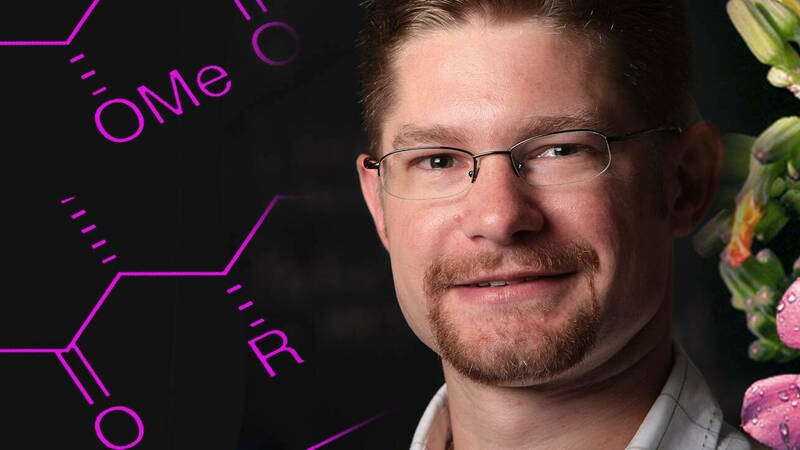
Brandon Ashfeld
Professor
- Office
- 305D McCourtney Hall - West
Notre Dame, IN 46556 - bashfeld@nd.edu
Research Areas
- Organic Chemistry
Research Specialties
- Energy
- Medicine
- Synthesis
Prospective Graduate Students
Biography
| Year | Title |
|---|---|
| 2022-present | Professor, University of Notre Dame |
| 2014-2022 | Associate Professor, University of Notre Dame |
| 2016-2020 | Director of Graduate Studies, University of Notre Dame |
| 2007-2014 | Assistant Professor, University of Notre Dame |
| 2004-2007 | Ruth L. Kirschstein NIH Postdoctoral Fellow, Stanford University |
| 2004 | Ph.D. in Chemistry, University of Texas at Austin |
| 1998 | B.S. in Chemistry, University of Minnesota-Twin Cities |
Selected Awards
2015 Rev. Edmund P. Joyce, C.S.C. Award for Excellence in Undergraduate Teaching
2011 NSF CAREER Award
2009 University of Notre Dame Faculty Scholarship Award
Research Interests
Our research program is focused on the development of new methods to enable unconventional bond formations in the synthesis of complex natural products and designed materials. Our main objective is to use new chemical constructs to design and synthesize improved chemotherapies for brain and CNS cancers, and materials that will ultimately lead to the reduction of atmospheric concentrations of anthropogenic CO2.
Designing Brain and CNS Cancer Chemotherapeutics.
We seek to addresses the issue of suitable brain and CNS drug treatment options by focusing on natural products with promising cytotoxicity that also display blood brain barrier (BBB) transcytosis properties. Specifically, the families of diarylheptanoids and glycosidic marine toxin natural products have captured our attention due to the potent anticancer activity exhibited by multiple members of each class. We are currently working toward the development of two new synthetic methods that will enable the efficient, and scalable construction of these natural products for the development of new CNS cancer chemotherapeutics. The first approach is based on the conceptual design of a tandem reaction sequence composed of mechanistically distinct transformations facilitated by a single catalyst to rapidly assemble all alkyl-substituted tertiary carbons centers. By exploiting aldehydes as traceless dielectrophilic entities, in conjunction with the bifunctional attributes of titanocene, we can construct multiple C–C and C–X bonds in a highly convergent fragment coupling. Our second area of methods development focuses on the formation of Csp2–N and Csp2–C bonds, which constitutes one of the most vibrant areas of research in synthetic organic chemistry today. Unfortunately, conventional multistep protocols involving organometallic reagents and transition metal complexes can complicate complex molecule synthesis. Our program is working toward providing a solution to this long-standing problem in organic synthesis through the development phosphorus-mediated C–C and C–N bond formations that ultimately circumvents the need for traditional organometallic or transition metal-based reagents.
Innovating the Chemistry of Covalent Carbon Capture.
Managing the impact of human activities on the concentration of CO2 in the atmosphere is the most far-reaching environmental challenge facing the world today. Carbon capture and separation is an integral part of our energy future, independent of its application to todayâs coal-fired power plants. Our research program is working toward the development of a strategy to control atmospheric, anthropogenic CO2 concentrations through the design of energy efficient carbon capture and sequestration materials. Our ultimate goal is the development of a regenerative material that will undergo selective super-stoichiometric carbon capture with near-zero parasitic energy consumption. Recognizing that C–C and C–X chemical bonds are convenient media for energy storage, transport, and consumption, our efforts rely on the design and synthesis of functionalized N-heterocyclic anions and carbenes for energy efficient gas phase removal of CO2.
Selected Publications
- Nguyen, M.; Nikenich, M. R.; Seifert, K.; Pinkenburg, C.; Lai, F. L.; Walther, H. L.; Hartmann, M.; Szulc, A.; Sparkes, E.; Chen, S. H.; Wikramanayake, R.; Bernaus-Esqué, M.; Liu, Y. J.; Tebar, F.; Serwetnyk, M.; Wenninger, A.; Patzke, C.; Blagg, B.; Ashfeld, B. L.; Groundwater, P. W.; Hibbs, D. E.; Hoy, A. J.; Rentero, C.; Enrich, C.; Cho, A. N.; Du, J. J. and Grewal, T. "Small Molecules to Elevate Rab7-GTPase Activity and Lower Cholesterol Accumulation in Niemann-Pick Type C Disease" 2026 Pharmaceutical Research, 43, pp.1009-1031. DOI: 10.1007/s11095-026-04058-8.
- Cisternas, P.; Kim, J.; Ashfeld, B. and Zartman, J. "DYRK1A in the Physiology and Pathology of the Neuron-Astrocyte Axis" 2025 Frontiers in Neuroscience, 19, 1626062. DOI: 10.3389/fnins.2025.1626062.
- Durling, G. M.; Milazzo, T.; Marin-Rimoldi, E.; Ouimet, J. A.; Phillip, W. A.; Maginn, E. J.; Luo, T. F. and Ashfeld, B. L. "Tuning the Directional Solubility of Ionic Liquids through Multicomponent Ions for Low-Temperature Desalination" 2025 Journal of the American Chemical Society, 147 (24), pp.20294–20301. DOI: 10.1021/jacs.4c16294.
- Kim, J.; Rodriguez, K. X.; Eckert, K. E.; Oliver, A. G. and Ashfeld, B. L. "A RhII-Catalyzed [4+3]-Cycloaddition Via the Stereoselective Cyclopropanation of Vinyl Allenes En Route to Oxepino[b]Indoles and Subsequent Elaboration to Spirooxindole Frameworks" 2025 Organic Letters, 27 (19), pp.5003–5008. DOI: 10.1021/acs.orglett.5c01329.
- Gu, K.; Hall, M. T.; Tucker, Z. D.; Durling, G. M. and Ashfeld, B. L. "Catalyst-Controlled Directing Group Translocation in the Site Selective C-H Functionalization of 3-Carboxamide Indoles and Metallocarbenes" 2025 Nature Communications, 16 (1), 97. DOI: 10.1038/s41467-024-55246-2.
- Deng, S. K.; Liu, T. A.; Ilnytska, O.; Allada, T.; Fomina, A.; Lin, N.; Petukhova, V. Z.; Pathmasiri, K. C.; Chinthapally, K.; Blagg, B.; Ashfeld, B. L.; Cologna, S. M. and Storch, J. "Molecular Determinants of Phospholipid Treatment to Reduce Intracellular Cholesterol Accumulation in NPC1 Deficiency" 2024 Journal of Biological Chemistry, 300 (11), 107889. DOI: 10.1016/j.jbc.2024.107889.